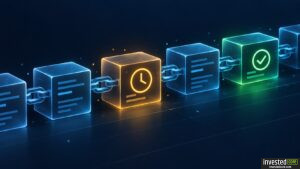
How to Use Blockchain Explorers to Verify Transactions and Track Cryptocurrencies

Use specialized platforms such as Etherscan or Blockchair to verify system transactions. These resources offer a user-friendly interface where you can enter unique IDs and addresses and match them with valid records. It’s also worth paying attention to the hash search function to quickly find the records you need. Do your research on how moving fees are determined beforehand. This information is available on most services. Fees can vary significantly depending on network load and the chosen cryptocurrency. It is important to know how long confirmation takes, as this affects the speed of receiving funds. Monitor the status of the operation: completed, pending or rejected. Resources often display all these statuses, as well as confirmation time indicators. This will help you determine whether to wait for the process to complete or look for the cause of the delay. We also remind you that you can subscribe to notifications about the status of transactions.
Table of Contents
- 1.How to Choose the Right Blockchain Explorer for Your Needs
- 2.Functionality
- 3.Source reliability
- 4.Steps to verify a transaction in a blockchain
- 5.How to Interpret Search Results in Blockchain Explorer
- 6.What is a wallet address and how to use it during verification
- 7.Checking the transaction status: what do the “pending” and “confirmed” statuses mean?
- 8.Security and privacy when using blockchain browsers
- 9.Anonymity and identification
- 10.Errors and fraud
- 11.Question and answer:
How to Choose the Right Blockchain Explorer for Your Needs
When choosing a tool, pay attention to the supported networks. Different services work with different systems, such as Bitcoin, Ethereum or Litecoin. Make sure the option you choose meets your requirements and provides up-to-date information on the assets you are interested in. The convenience of the interface also plays a significant role. If you're not familiar with technical terms, choose a product with an intuitive design that makes searching and analyzing data easy.
Functionality
Pay attention to the set of functions. The presence of filters, graphs, visualization and analytics will help you better understand what is happening on the network. Make sure you can access detailed information about each block and transaction, as well as historical information.
Source reliability

Check the service's reputation. Read user reviews and explore online forums to understand how often the resource updates data and how reliable it is. It is also important to have protection against fraud and leaks of personal information.
Steps to verify a transaction in a blockchain
Find the transaction ID and paste it into your browser's search bar. This will allow you to quickly find the necessary information about the movement of funds. Look at the progress status, which may be unpaid, confirmed or rejected. This affects the ability to use the assets. Parse a block containing information about an operation. Write down the block number and time of addition - this data will help you evaluate the processing speed.
- Check the amount - it must match that specified in the application.
- Study the sender and recipient addresses. Make sure they are correct.
- Please note processing fees. It is also displayed in the block.
Pay attention to the number of confirmations. The more confirmations, the more reliable the completed operation is considered. This confirms the actual receipt of the assets by the recipient. If necessary, review address activity history to understand what activity occurred before and after a particular check. This can give you an idea of the address's reliability.
- Check to see if there are recent transactions with suspicious activity.
- Assess whether the address was on a blacklist or on a fraudulent activity site.
At each stage, it is important to monitor the relevance and reliability of the data. Use trusted resources to obtain information about the functioning of the Ledgers and the parties involved.
How to Interpret Search Results in Blockchain Explorer
When performing a search by address or hash, you need to pay attention to the status of the operation. Status details can range from "confirmed" to "pending". A value of "confirmed" indicates successful completion, while "pending" indicates that time is required for processing. The next important element is the number of confirmations. This number shows how many blocks were added after your object. The more confirmations, the higher the level of reliability. You should also consider the amount and commission. These parameters allow you to understand how much funds were transferred and what fee the miner charged for processing. Typically, the cost of a transaction is strictly proportional to its urgency. An important aspect is the execution time. It helps to evaluate how quickly the operation went. Fast processing signals low network congestion. The address details section provides information about your current balance and activity. You should pay attention to the number of incoming and outgoing transactions to evaluate the behavior of the owner. Examination of comments and additional metadata can reveal important details regarding a specific transaction. This is especially true for large amounts. A quick check of the blocks included in the data structure is also useful for identifying the time and time when an object was committed. This is important for tracking the history of transactions. Use filters and categories to make it easier to find specific data. They help you quickly find the results you need among many records.
What is a wallet address and how to use it during verification
A wallet address is a unique string of characters that is used to send and receive funds online. There are different address formats depending on the type of currency: for example, Bitcoin has addresses starting with the letter "1" or "3", while Ethereum uses addresses starting with "0x". When analyzing transactions, it is important to know exactly the wallet address, since it is the key to information about receipts and departures. To access data about funds associated with a specific combination of characters, you can use special interfaces that allow you to enter an address and obtain all the necessary information. It is recommended to check not only the current balance, but also the transaction history. This will make it possible to track when and how much money came or went from a given address. At the same time, you should be attentive to possible fraudulent schemes - always check that the address belongs to the expected recipient. It is also important to remember privacy. Open access wallets publish addresses, allowing anyone to verify the information associated with them, but this can also lead to security complications. Use long-term addresses for storing assets and temporary addresses for one-time transactions. Finally, keep your wallet addresses in safe places. Write them down or use password managers to protect access to your finances. Address verification is not only about assets, but also about the security of your data.
Checking the transaction status: what do the “pending” and “confirmed” statuses mean?
The "pending" status indicates that the operation you submitted has not yet been included in the block. This may occur due to network congestion or low execution fees. To speed up the process, it is recommended to increase the commission and resend the request or wait until the load decreases. The “confirmed” status means that your operation has been successfully included in the blockchain and accepted by the network nodes. Typically, after receiving several confirmations (from 3 to 6 depending on the currency), the transaction is considered safe and cannot be cancelled. It is recommended to check the number of confirmations to assess the reliability of the completed transaction.
Security and privacy when using blockchain browsers

Ensure that your data is encrypted when using asset tracking websites. Check if HTTPS is supported; this reduces the risk of information being intercepted by third parties.
Anonymity and identification
Try to minimize the disclosure of personal information. Use anonymous networks such as Tor to hide your IP address and location when interacting with online services. If necessary, create separate emails for registering on such platforms.
Errors and fraud

Check your information sources regularly. Pay attention to the presence of verified data. Read user reviews before using a tracking site. If a resource is suspicious, stop. Determine the legitimacy of a platform by doing a little research.
| Recommendation | Description |
|---|---|
| Use HTTPS | Encryption to ensure secure data transmission. |
| Anonymous networks | Hide IP address to protect privacy. |
| Checking sources | Study reviews to avoid scams. |
Follow these guidelines to improve security when using block analysis tools. Wrong actions can lead to leaks of personal information and loss of assets.
Question and answer:
How do blockchain explorers work and how do they verify cryptocurrency transactions?
Blockchain explorers are web applications that allow users to view and track transaction records on various blockchains. They work by analyzing public data recorded in blocks and presenting it in a useful format. To verify a transaction, the user enters the wallet address or hash of the transaction, and the browser displays information such as the status of the transaction, the amount of funds sent and received, and the execution time. This data helps ensure that the transaction was completed successfully and does not have any problems.
Why is it important to use blockchain explorers to verify transactions?
The use of blockchain browsers is necessary to ensure transparency and reliability of cryptocurrency transactions. Since most transactions take place on public blockchains, anyone can check the status and details of a transaction. This allows users to verify that their funds have been sent or received, and to detect possible errors. Blockchain explorers allow you to verify that a transaction was actually recorded on the blockchain, which minimizes the risk of fraud and increases trust in the system. Thus, they provide an additional layer of protection for cryptocurrency users.